Tuesday, June 30, 2009

Archdiocese publishes review of Clergy Funds

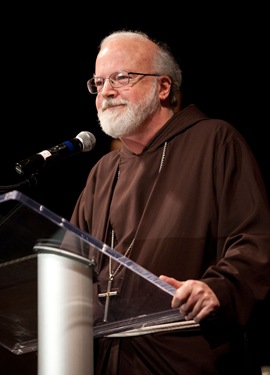
One of the concerns I often hear from Catholics relates to reports that funds collected from parishioners at Christmas and Easter for the support of sick and retired priests were used for other than the announced purposes. The following is a press release from the archdiocese regarding the publication of an independent accountants' review of the Clergy Funds in question. On the archdiocesan website, you may read the full report to which the press release refers.
Braintree, MA - At the request of the priests of the Archdiocese of Boston, and at the direction of Cardinal Seán P. O'Malley, the Archdiocese commissioned a thorough study to review the financial history of the Clergy Funds from their beginning in 1972 through June 2008. This study is one of several steps in the overall effort to understand the current situation and to stabilize the Clergy Funds, which provide for the retirement, medical and financial needs of our priests, and bring the Clergy Funds to full health as soon as possible.

Very Reverend Richard M. Erikson, Vicar General & Moderator of the Curia, said, "Cardinal Seán considers the stabilizing of the Clergy Funds to be one of his top priorities as Archbishop. The great effort undertaken in recent months by many talented people is bearing much fruit for our priests. This process has been one of the most consultative and transparent initiatives undertaken by the Archdiocese. We welcome the continued input of our priests for whom we serve through this important work and the committed lay leaders who are assisting us in this endeavor."

The study was conducted by Joel Aronson, CPA, and his team from Alexander, Aronson, Finning & Co. (AAF), one of the largest full-service public accounting and consulting firms in New England. The Clergy Funds study is the result of a significant amount of effort by AAF with the assistance of more than 30 priests and staff of the Archdiocese over the past six months. The full study was mailed to priests of the Archdiocese of Boston during the week of June 22. All priests were invited to attend presentations and discussions about the report at any of three locations in the Archdiocese on June 29th and 30th.

The Archdiocese noted that the study clearly shows that over its 37-year history, the Clergy Funds have, as reported by AAF, experienced a dramatic increase in expenditures due to an aging population of priests and the rising cost of health care and housing. AAF also noted that while "operating revenues have increased over the years, they have not increased at the same pace as expenses."

In addition, AAF stated that "we did not identify any use of Clergy Benefit Trusts Funds that were outside the scope of benefits and related costs covered by the trust agreements or any diversion of funds." Church officials concur with this determination and believe that the money collected was used appropriately for the care of the priests of the Archdiocese.

Current estimates point to a Clergy Funds unfunded liability for future anticipated retirement expenses to be in excess of $114 million. If not addressed, the Funds will run out of money in 2011. In a letter to the priests, Chancellor James P. McDonough said, "We are simply not going to allow that to happen." He added, "From the start Cardinal Seán has made clear that he is absolutely committed to provide for the care of our priests. You have earned this respect from a lifetime of giving so much during your ministry to the people of God. To that end, working together, we will not fail you in this endeavor."

The Archdiocese stated that the reasons for the deficit include, among others: the Christmas and Easter collections have remained relatively flat for the past several years; investment returns have fallen below actuarial projections; and there have been dramatic increases in health care and housing costs while the percentage of the priests' population comprised of senior priests has increased from 16% to 36%.

More specifically, the Clergy Funds Operating Budget is receiving approximately $5.5 million per year from the Christmas and Easter collections but the Church is spending in excess of $15 million per year for retired and disabled priests' stipends, housing costs, and medical/dental benefits.
...

Read the complete press release
and find a link to the complete independent accountants' report
here.
-ConcordPastor

Bono's cover of the Magnificat: Magnificent


In a recent Rolling Stone magazine interview with Brian Hiatt, U2’s Bono says that the song “Magnificent” is inspired by the Blessed Virgin Mary.

“All music for me is worship of one kind or another,” says Bono.

The song appears on the band’s new album, “No Line on the Horizon.”

“Magnificent was inspired by the Magnificat, a passage from the Gospel of Luke in the voice of the Virgin Mary that was previously set to music by Bach,” says Bono. “There’s this theme running through the album of surrender and devotion and all the things I find really difficult.”

- National Catholic Register

MAGNIFICENT

Magnificent
Oh, magnificent

I was born
I was born to be with you 

In this space and time
After that and ever after
I haven't had a clue

Only to break rhyme
This foolishness can leave a heart
Black and blue


Only love
Only love can leave such a mark

But only love
Only love can heal such a scar


I was born
I was born to sing for you 

I didn’t have a choice
But to lift you up
And sing whatever song you wanted me to
I give you back my voice
From the womb my first cry
It was a joyful noise
Oh, oh

Only love
Only love can leave such a mark
But only love
Only love can heal such a scar


Justified till we die
You and I will magnify

Oh, the magnificent

Magnificent

Only love
Only love can leave such a mark

But only love
Only love unites our hearts


Justified till we die
You and I will magnify
Oh, the magnificent

Magnificent

Magnificent

One man's story: how I became a priest...


_______-Image by Spreadshirt

Catholic News Service (CNS) has begun a series of reflections by priests as the Year for Priests begins. As they are published, I'll link to them here.

Here's a snip from the first CNS installment:
... Originally from Houston, Texas, I grew up a cradle Catholic and am still blessed with a close family that has remained together through the ups and downs. I was the typical rebellious teenager, but always maintained a sense of responsibility — probably because I was too afraid of my father’s dissatisfaction . . . or guilt trip, depending on the episode. In 1993, I attended World Youth Day in Denver and saw the Catholic Church for the first time. That is to say, I saw the “big picture” — a church that was much more than my experience of Sunday Mass. World Youth Day was (and is) big enough for even my imagination, and so the seed of priesthood was planted. I entered the diocesan seminary very young, only to leave a year and a half later. After a few false starts, I finished college and began working in “the real world.” Success came quickly, but my soul paid the price. I spent many years away from God and anything associated with religion.

Failure would later follow, and, for a while, life was very, very hard. I was forced to dig deep within myself in order to move forward and it was then that I found God — waiting. The relationship with God I once cherished had suffered terribly because of my own actions and it would take almost two years to repair it. Of course, God was willing to take me back immediately, but I needed a lot more time to realize who I was and what my life was to be about.

...

(Read the complete story)
-ConcordPastor

Monday, June 29, 2009


Image: MinistryDepot.com

No hometown welcome for the prophet - not even Jesus!

Especially because the coming weekend is a holiday weekend (Happy 4th of July!) it's not too early to begin to look over the scriptures for the 14th Sunday in Ordinary Time.

Thus Sunday's gospel (Mark 6:1-6) includes a verse well known by believers and non-believers alike: Jesus said to them, "A prophet is not without honor except in his hometown and among his own relatives and in his own household." (NAB 1995)

As is usually the case, the first lesson (Ezekiel 2:2-5) thematically connects with the day's gospel. Here the Lord missions Ezekiel to preach to a people "hard of face and obstinate of heart - a rebellious house."

The second lesson (2 Corinthians 12:7-10) breaks the theme of the first and third lections but is also a familiar text. Here St. Paul speaks of the "thorn in the flesh" that keeps him humble and dependent on the mercy of Christ.

These texts and background material on them can be found here and here. Help for preparing youngsters to hear the Word at Mass this weekend can be found here.

These scriptures fall on this weekend as the Sundays in Ordinary Time tick by, with no intended relationship to the 4th of July. Should a preacher try to connect these scriptures with the civil holiday? If so, what kind of connections might he or she make? (You can be sure the parallel question of whether or not to sing patriotic songs at this weekend's liturgy is on the minds of music ministers!)

Care to comment?

-ConcordPastor

Monday Morning Offering - 53


Image: George Mendoza

Good morning, good God!

Friday past was the last day of school in these parts
and kids are off on summer vacation...

I remember such times,
50 years or so ago,
when summer had no horizon:
a time and place as close to heaven
as a young heart might imagine...

Something in a child’s summer joy
comes, I'm sure, a gift from you, O Lord:
a taste of timelessness,
a promise of perpetual play,
a season of sun and unreasoned joy...

Heaven every summer!
Could the source of such a gift
be anything but divine?

But where did they go?
Where did the summers fly, Lord?
And I wonder, I worry:
do I still believe in summer's promise
of pleasure unending, unbending
to calendars clocking each day,
walking away the weeks of warmth?

If I don't believe in summer, Lord,
how will I believe in you or in heaven
where summer's joy surely never ends,
where summer's timeless stillness
calms with peace all other seasons' grief?

I offer you these months,
my heart's July and August days:
come summer with me, Lord;
summer deep down in my soul;
restore my faith in summer’s time,
in rest, in joy, in play, in you...

Summer in my heart, Lord,
and dwell there as if time would never end,
as if the time were child’s time, eternal time
when school is always out and joy is ever in…

And let others summer in my shade, Lord,
and share whatever summer’s peace is mine to give,
whatever summer’s light is mine to shed…

Good God of every season,
of Monday mornings and every day this week,
come summer with me, Lord,
summer deep down in my soul…

Amen.

-ConcordPastor

Four takes on one text


Image: Woman with Hemorrhage by Louis Glanzman
(Click on image for larger version)

In the combox on my homily for June 28, a reader, Irish Gal, critiques my handling of the gospel (Mark 5:21-43) .

I responded to Irish Gal in the combox but I think that she and others will profit, as I did, from reading a powerful reflection written by Fran over at St. Edward's Blog.

While there, you'll see that Fran links to Missy's thoughts on this scripture over at St. Anne, Pray for Us.

And while you're at it, take a look at the homily from the Deacon's Bench.

IF you take the time to read all four, it would be interesting to read your comments...

-ConcordPastor

Sunday, June 28, 2009

Homily for the 13th Sunday in Ordinary Time


Image: Daughter of Jairus by Joseph Brickey (Click on image for larger version)

Homily for the 13th Sunday in Ordinary Time

(Scripture readings for today's liturgy)

The superstitious say, “trouble comes in threes”
and many have applied that to the deaths this past week
of Ed McMahon, Farrah Fawcett and Michael Jackson.

But the rule of three is upset now
by news of the death of the daughter of Jairus!

(The scripture fails to give us this young girl’s name,
so for our purposes here, let’s call her Rachel.)

It may seem anachronistic to include Rachel
among this week’s more recent obituaries
but her status as a biblical celebrity spans two millennia,
a record today’s stars still have a long way to go to challenge.

Rachel’s fame, of course, is based not in her talent or popularity
but rather in her relationship to Jesus.
Had Jesus not entered her life as he did,
it’s likely we would never have heard of her.

But Jesus did come into her life, not at her request,
but at the pleading, the prayer of others
and he entered Rachel’s life when she was at least in a deep coma
-- if not dead.

And there’s a message for us.

Nothing can impede the Lord’s desire to be in our lives,
nothing can keep him out: not sin, not even death.
Jesus even enters the lives of those who are not looking for him,
who are not conscious or aware of him or his love for them.

Curiously, Jesus instructs Rachel’s family to "tell no one"
what he has done for them.
Obviously, they didn’t do a good job of keeping his secret:
if they had, we would not be hearing this story today.

Jesus told them to keep quiet about what he’d done
because he understood that its full meaning
would not be revealed or understood
until he himself rose from the dead.

We know of Rachel because Jesus entered her life
and her story is still with us not on its own merits
but because the story of Jesus is still with us:
her story is part of his story,
just as our story is part of his story, even today.

Jesus raised Rachel, Lazarus,
the widow's son in Naim and others from death
as a sign, a preview of his own rising from the dead.
In the light of Jesus rising on Easter
we see that the gift of life-after-death given to Rachel
is the gift of life Christ offers all of us,
even if we are unaware, not eveconscious, of his desire
to enter our hearts, to share his life with us.

I wonder if anyone here who does believe that trouble comes in threes
was miffed because I referred to that as superstition?

Well, I won’t retract that but I will point out
that the other unnamed woman in today’s gospel
(and let’s call her Rebecca) had her own superstition
which didn’t keep her from Jesus -- or Jesus from her.

Rebecca superstitiously believed that there was healing
- in Jesus’ clothes.


She also appears to be afraid of Jesus;
fearful of coming face to face with him
she approaches him from behind
to get what she so desperately wanted.

And Jesus did heal her -
but the healing didn't come from his clothes.
He makes this very clear when he tells Rebecca,
“Daughter, your faith has saved you.
Go in peace and be cured of your affliction.”

As with Rachel, we know Rebecca’s story not on its own merits
but because her healing enfolds her in the story of Jesus.
Jesus works through Rebecca’s fear, her shyness,
even through a superstitious faith to enter her heart and life
-- just as he worked through Rachel’s sickness and death
to enter her life and the hearts of those around her.

In my life and yours, today,
through what is Jesus working

that he might reach us and bring us
healing, mercy and the gift of life?


Of course, sometime later, in events not recorded in the gospel,
Rebecca died… and Rachel died… again:
and then was revealed to them the fullness of healing and life
of which Jesus had already given them a taste.
What began in Rebecca’s healing, what began in Rachel’s rising
came to fulfillment in the risen Christ.

The stories of our sisters Rebecca and Rachel are still with us
because they are part of the story of Jesus.
And every week at this altar,
Jesus invites us into the same story of love and healing,
and offers us, in the Eucharist,
a glimpse of what is yet kept partly secret,
yet to be fully revealed.

In the bread and cup of this sacrament:
he heals us;
he gives us a taste and a sip of the peace that will be ours;
he invites us to become part of the life of his story,
the story of the One who will never forget us.

-ConcordPastor

Saturday, June 27, 2009

Cardinal Sean: Don't be overwhelmed by sin...


Image: The Prodigal Son by Edward Riojas (Click on image for larger version)

Speaking at a retreat in Texas for the Catholic Association of Latino Leaders, Cardinal Sean O'Malley advised retreatants not to be overwhelmed by sin:

Speaking about the parable of the Prodigal Son, he said that the true Catholic attitude is “not to be overwhelmed by sin no matter what our situation, because it is so clear that the Father of the Prodigal Son is not merely willing, but anxious to forgive.”

“The Father never imposes himself, but waits longingly, scanning the horizon for a glimpse of us, and upon spotting our return in the distance, rushes to meet us.”

Cardinal O’Malley recounted how his father was “very clear” about how often to go to the Sacrament of Reconciliation: “When it was time to get a haircut, it was time to go to confession.”

He also advised people to be forgiving of others and not develop what he jokingly called “Irish Alzheimer’s,” defining it as “an unpleasant condition where you forget everything but your grudges!”
...

(Read the complete report from CNA)

Just such preaching might be good material for the cardinal's plan for weekly nights of confession available in all churches of the archdiocese in the seasons of Advent and Lent in the year ahead.

-ConcordPastor

Friday, June 26, 2009

So simple... so beautiful... praise God!


My baby broc holding on to yesterday's raindrop...


Which is more beautiful: the image or the caption?

Nature's beauty is refracted and magnified in the eye of the beholder...

(H/T to reader MDR who captioned this photo which she took with her iPhone. Be sure to click on the image for a larger version.)

A Prayer for Priests in the Year for Priests


_______-Image by Spreadshirt

Each Friday in this Year for Priests I'll post this prayer and invite you to remember all priests and especially those who have been, who and who may one day be a part of your life.

Several prayers for the Year for Priests are available through the US Bishops site. As an exercise for myself to enter into the spirit of this year, I wrote the following. For whatever use you make of it on behalf of my brother priests and me, we are most grateful. (Links to other material on the Year for Priests can be found on the sidebar.)

A Prayer for Priests

Gracious God, loving Father,
font of every gift and good,
make of priests for us we pray:

men of faith, men of love,
humble servants of your Word,
prophets of your Spirit’s grace;

men of hope, men of peace,
strong defenders of the truth,
heralds of your holy gospel;

men of prayer, men of praise,
guardians of our sacred rites,
of the scriptures and tradition;

men of changelessness and change,
men who follow you each day,
when and where your Spirit leads;

men of tenderness and strength,
comfort for the sick and weary,
shepherds leading home the lost;

men of counsel, men of wisdom,
gentle guides for the confused,
lights along the darkened path;

men of mercy, patient men,
understanding and consoling
of the grieving and abused;

men of justice and compassion,
reconciling and forgiving,
men of healing in your name;

men of sacrifice and honor,
single minded in your service,
set apart to do your will;

men of holiness and joy,
men anointed by your grace,
men ordained to serve as Christ.

Make us one with them in faith
and in Christ your only Son
in whose holy name we pray.

Amen.

-ConcordPastor

Thursday, June 25, 2009

Ready for Sunday?


Image: Daughter of Jairus by Wilson Ong

Check this earlier post for info on this Sunday's liturgy and scripture texts (hints for helping your young ones prepare to hear the Word, too!). See Sunday's gospel to understand the happy family in the painting here.

That one line above is as wise a nugget of counter-cultural advice
as one might find these days.

It was Descartes who wrote,

I think, therefore I am.

Somewhere along the way it seems we've come to believe,

I think it, therefore it is correct.

Although I have a high regard for the wisdom of personal experience,
such wisdom is always subject to a Wisdom greater than my own.

That's what I think
and I believe there's wisdom in that thought.

And Wisdom greater than mine confirms my thought to be true.

But I think, in fact I know,
there are times when I don't honestly submit my experienced wisdom
to the scrutiny of a greater Wisdom.

And I know there are times when Wisdom with a capital W
doesn't confirm my own in the lower case.

So I think, indeed I know,
I need humility to discover Wisdom's truth,
not only to test my own
but even more to treasure and enjoy her beauty
for its own sake.

-ConcordPastor

Wednesday, June 24, 2009

Oh, to be a fly on THIS wall!


The one who campaigned as the candidate of hope (how's that Obama vote workin' for ya?) and the one called pope will soon be meeting for a sit-down.

CNS has the story:
Pope Benedict XVI will welcome U.S. President Barack Obama to the Vatican July 10 for an audience scheduled to begin at 4 p.m.
...

Discussions between popes and U.S. presidents usually focus on common concerns regarding world events and the church's concerns over issues or policies with special moral relevance. So in addition to discussing ongoing tensions in the Middle East, especially the Israeli-Palestinian conflict and the situation in Iraq, Pope Benedict likely will bring up his concerns regarding abortion policy in the United States and renewed government permission for embryonic stem-cell research.

(Read the complete report)
-ConcordPastor

To make the whole diocese "your parish"

Convocation_072_54
Cardinal Sean has posted on his blog the talk he gave at the recent convocation of priests beginning the Year for Priests in the Archdiocese of Boston. Here's a portion of his remarks, the complete text is available on his blog. (After clicking on the link, scroll down to the text and photos from the convocation.)
It is my belief that if we have strong groups of fraternal support where we can witness to each other, encourage one another, and understand each other, then we will be able to build a communio among ourselves that we can model for our people.

A spirit of cynicism and negativity, a rejoicing over evil, a sense of competition and one-upmanship is poisonous to priestly fraternity and to the Body of Christ. We must learn to banish clerical jealousy, to celebrate each other’s successes and mourn each other’s failures, rather than rejoicing when a rival has problems or lamenting the good fortune of a brother priest...

The more we become friends, and the more we become focused on Christ and on the mission of announcing the good news of building a civilization of love, the more Christ’s Church will flourish. Internal divisions, polarization, and highly personalized theologies shatter the unity of the presbyterate and of the Church.

Support groups tend to bring together like-minded men, or men who share certain experiences, similar ages. This can give a natural cohesiveness to the group and help guarantee the survival and health of a support group.

The Vicariate meetings based on geography are usually less homogenized and might represent a wider spectrum of age, opinion and experience. The focus is often less on personal growth and more about pastoral life. Still it can be a unique opportunity to build priestly fraternity and to allow a conversation to take place in which every voice can be heard. Everyone needs to have a stake in making a good vicariate meeting. With time for shared prayer, discussion, planning, analyzing and dreaming together about how we can better carry out our mission as Christ’s Church...

The success of the Vicariate meetings and the strength of priestly support groups will depend on our willingness to commit ourselves to minister to one another in order to build a unified and strong presbyterate. Pastors make such great sacrifices for their people of the parish. We must see that an essential part of our ministry is to minister to the priests and to make the whole diocese “your parish,” especially those sectors where there are the greatest needs.

Fruitful discussion and recommendations that can be clearly communicated to the Priests’ Council can enrich the work of the council and allow members of the Presbyteral Council in some way to be representatives of the priests in the Vicariates. The Vicariates can help us to know best practices, to identify problems that need to be addressed, and help find more effective ways of collaboration in carrying out the Church’s Mission.

Tuesday, June 23, 2009

Pro-life on the death penalty

The Florida Catholic, the newspaper of the Archdiocese of Miami, offers: The death penalty: voices unite for louder opposition. The "voices" here include those of an accused man, a public defender, a chief justice, a victim's loved one, a pastoral minister, a family counselor, a death row warden, a priest, bishops and statistics from polls.

Let the sunshine in!

My radio wakes me with classical music and I was "alarmed" this morning to be roused from sleep by the concerto "L'autunno" from Vivaldi's Four Seasons. That's the "autumn" section and for a brief moment I feared I'd slept through summer or that, indeed, it had never arrived. This cloudy, rainy June has folks in these parts wondering if summer will ever come.

Well, here's a delightful poem to bring a little sun into this gray day, followed by the summer movement from Four Seasons.

The Sun Grows In Your Smile

When you smile, the air grows warm and soft,
the earth is watered with gentle mists,
seeds sprout and spread leaves above the dark, damp soil,
earthworms pierce the crust and frolic across the surface
to the delight of fat, happily hunting robins,
lilies of the valley unfurl beside purple, grape-scented irises,
fat pink and maroon peonies, and gay California poppies,
damask roses hurl their rich fragrance to the wind,
the crazy-with-sheer-joy song of the Northern mockingbird
echoes above other chirps and sweet winged notes,
gardeners join the worms in the warm, rich dirt,
children gallop across yards and grab handfuls of dandelions
to present to mothers who will set them in glasses of water
in kitchen windows or on dining room tables, weeds
glorious after the dark of winter with the color of the sun
that grows and warms and heals in your smile.

- by Linda Rodriguez in Hearts Migration

Image: Inhabitat

-ConcordPastor

Reconciliation: Going (back) to confession


In today's Boston Globe, columnist Alex Beam writes about confession and a program the Archdiocese of Boston is planning for Advent 2009:
In Colm Toibin’s latest novel, “Brooklyn,’’ the two lovers Eilis and Tony make love out of wedlock. They are Roman Catholic, it is the 1950s. They are in love and intend to marry - in fact, they do marry - but Eilis immediately insists they both go to confession and tell a priest they have sinned.

That was then. For a variety of reasons, including the reforms of Vatican II, the institution of Saturday evening Mass, and modern Catholics’ more catholic understanding of what sin is, the ritual of individual confession is disappearing in the modern church. Most Catholics over 60 remember lines of parishioners snaking out the church door, waiting to confess. “Practically overnight, the lines on Saturday afternoons vanished and the hours appointed for confession dwindled,’’ Boston College historian James O’Toole wrote in 2000, “as even the most ardent Catholics stayed away.’’

It may be coming back. Three years ago, Donald Wuerl, the archbishop of Washington, D.C., launched a Lenten program called The Light Is on for You, backstopped by a radio and subway ad campaign that the Washington Post called an “advertising blitz.’’ The idea was to have every church in the D.C. area open for confession on Wednesday evening, instead of competing with the soccer games and cello lessons that clutter up Saturdays...

The Washington program succeeded, and several cities, including Baltimore, Toledo, Ohio, and Bridgeport, Conn., launched similar efforts. In late fall, during the four weeks before Christmas, the Boston Archdiocese will launch its own Wednesday evening effort to revive confession. As in D.C., it hopes to use lay media to broaden the message beyond churchgoers...

(Read the complete article)
-ConcordPastor

Monday, June 22, 2009

Word for the Weekend - June 28


Time to open our minds and hearts to the scriptures and begin to prepare to hear the Lord's Word at Mass this coming weekend, the 13th Sunday in Ordinary Time.

You'll find the texts and background material on them in St. Louis and hints for helping children prepare to hear the Word here in New York (both sites only a click away!).


The first lesson, from the Book of Wisdom, answers the question, "Where did death and other undesirable things come from?" (Hint: not from God!)

The second text, from Second Corinthians, contains a number of parallelisms which add a finer literary flair than we may be accustomed to find in St. Paul's letters.

The gospel is a complex text and there is the option of a shorter version which your priest or deacon might select. The longer version tells the story of the raising of Jairus' daughter from the dead. On his way to Jairus' house, Jesus meets a woman suffering from hemorrhages and cures her. (See the sidebar for a widget with a song taken from today's gospel passage.) The text then brings Jesus to Jairus' home and his daughter. (The shorter version inlcudes only the Jairus story.) To compare the two versions, click on the St. Louis site which will offer you a link to the day's scriptures.

(I've not yet decided for which version I'll opt and preach on. Any suggestions?)

Image: EternalEchoes

-ConcordPastor

USCCB affirms D'Arcy's pastoral care for ND


Some were disappointed that the American Catholic bishops did not, at their June meeting, issue a reprimand to the University of Notre Dame for its having invited Barack Obama to receive an honorary degree and serve as principal speaker at its 2009 commencement. Today the USCCB issued the following:

During their spring General Assembly, June 17-19, the United States Conference of Catholic Bishops expressed their solidarity for Bishop John M. D’Arcy of the Diocese of Fort Wayne-South Bend, Ind., in particular for his care and concern for the University of Notre Dame, which resides in his diocese.

The bishops made this show of support during executive session, but released the following statement:
The bishops of the United States express our appreciation and support for our brother bishop, the Most Reverend John D'Arcy. We affirm his pastoral concern for Notre Dame University, his solicitude for its Catholic identity, and his loving care for all those the Lord has given him to sanctify, to teach and to shepherd.

U.S.C.C.B.

As did D'Arcy himself through this whole affair, the US bishops set just the right tone here for addressing a difficult and complex matter.

-ConcordPastor

Monday Morning Offering - 52


Image: George Mendoza


Good morning, good God!

I meet so many folks who are trying, Lord:

trying to stay on the right path,
trying to take a step in a new direction…

trying to begin, or begin again,
something
(even a simple thing)
so very hard to do…

trying to make a right decision,
to do the right thing…

trying to believe,
to trust:
in themselves,
in others,
in you…

trying again
when they’ve tried so many times before
and are tired of trying -
yet trying to try again…

I meet so many folks who are trying, Lord...

So, I offer you this morning
all the efforts of all of us who try:
who try to know, love and serve you
in all we do…

I offer you our good intentions, Lord:
forgive our false starts,
give us fresh starts
and the hope we need to try again…

I offer you our earnest desires
and ask, Lord, that you keep us honest:
show us how we so easily con ourselves
and remind us that to be honest with ourselves
is to be honest with you…

I offer you all our redoubled efforts, Lord,
and pray you redouble the grace
that is yours to give,
that we so much need
and is ours for the asking…

I offer you our desire, Lord,
to choose what is true, good, healthy and pure
and when we settle for less
give us the desire to desire more:
more of what is good, good for us
and good for our life with you and with others…

I offer you our need, Lord,
for you to deepen our trust,
refresh our hope,
renew our strength
and give us the will
to live one day at a time…

Be patient with us, Lord,
and give us patience with each other
as each of us tries
and tries again

to live according to your will and Word,
this Monday morning
and every day and night this week.

Amen.

-ConcordPastor

Sunday, June 21, 2009

Homily for the 12th Sunday in Ordinary Time


(Click on image for larger version)

Let us cross to the other side...

Is Jesus taking a nap in your boat?
Have you had trouble trying to wake him up?
Do you sometimes wonder if he’s even on board?
Is he taking a long time to calm the storm around you?

That’s pretty much the scene in today’s gospel
and it might seem at first glance that this story
is about Jesus rescuing us from the storms of life.
But is that so?

One of the most important lines in this story
may have slipped right by us. It was right at the beginning:
“Jesus said to his disciples, ‘Let us cross to the other side.’”

That’s Jesus telling us:
“We're going somewhere. And we’re going together.
We’re going to move from here to a different place.
Things are changing and I’m going with you.”

And that’s just when the squalls and storms come up, isn’t it?
When we realize that things are changing:
changing from health to sickness;
changing from employment to unemployment;
changing from surety to confusion;
changing from marriage to divorce;
changing from at-home to away-from-home;
changing from a full nest to an empty nest;
changing from security to fear…

When changes are on the horizon, Jesus tells us,
“Come with me.
We’re going to get to the other side of this.
I’m with you: even if it seems that I’m asleep, I’m with you.
Even if your boat gets tossed by the wind and waves,
even if you take on a lot of water,
even if you get thrown overboard,
have faith in me: I’m with you.”

But how is he with us?

The question raised by this story is much less,
“Will Jesus perform a miracle and calm my stormy seas?”
and much more,
“Do I trust Jesus to be with me
even and especially when things are at their worst,
when I cannot see the other side,
when I don’t know where I’m going or how to get there?”

From what disaster in this gospel does Jesus really save his friends?
From a storm? Yes, but from much more than the storm:
he saves them from their own lack of faith and trust in him
-- which, for a follower of Christ
is an even bigger disaster than any storm at sea.*

Stories like this might tempt us to approach Jesus
as a miracle dispenser to save us in the nick of time.
But that’s not what Christ offers or promises.
What he offers is the faithfulness of a true friend, a beloved spouse
who promises to be with us in good times and in bad,
in sickness and in health -- not just until death parts us --
but even THROUGH death.
The one miracle Christ does promise every faithful follower
is that he will be with us through the storm of death
crossing over with us to the other side
where there will be life, and only peace, forever.

We seem to understand this, don’t we,
when we DO pray for a miracle
-- and no miracle comes.
We know that Christ himself prayed to be spared his storm,
his suffering,
but that his passion and Cross came nonetheless.
Even that did not keep him from trusting in his Father’s love
and his crossing over through suffering and death, to life forever.

Every week we come from the wind and waves of our own lives
and gather at this altar to remember and celebrate
the story of Jesus’ unspared suffering and death
and to share in the life that is ours already
in the gift, the calm, the peace of the Eucharist.

Let us keep faith and trust in Christ
“whom even the wind and sea obey,”
who has power even over life and death.

*See Joyce Ann Zimmerman

-ConcordPastor


God our Father,

in your wisdom and love you made all things.

Bless these men,

that they may be strengthened as Christian fathers.

Let the example of their faith and love shine forth.

Grant that we, their sons and daughters,

may honor them always

with a spirit of profound respect.

Grant this through Christ our Lord.

(Book of Blessings)

Thursday, June 18, 2009

A Prayer for Priests in the Year for Priests


_______-Image by Spreadshirt

Several prayers for the Year for Priests are available through the US Bishops site. As an exercise for myself to enter into the spirit of this year, I wrote the following. For whatever use you make of it on behalf of my brother priests and me, we are most grateful.

A Prayer for Priests

Gracious God, loving Father,
font of every gift and good,
make of priests for us we pray:

men of faith, men of love,
humble servants of your Word,
prophets of your Spirit’s grace;

men of hope, men of peace,
strong defenders of the truth,
heralds of your holy gospel;

men of prayer, men of praise,
guardians of our sacred rites,
of the scriptures and tradition;

men of changelessness and change,
men who follow you each day,
when and where your Spirit leads;

men of tenderness and strength,
comfort for the sick and weary,
shepherds leading home the lost;

men of counsel, men of wisdom,
gentle guides for the confused,
lights along the darkened path;

men of mercy, patient men,
understanding and consoling
of the grieving and abused;

men of justice and compassion,
reconciling and forgiving,
men of healing in your name;

men of sacrifice and honor,
single minded in your service,
set apart to do your will;

men of holiness and joy,
men anointed by your grace,
men ordained to serve as Christ.

Make us one with them in faith
and in Christ your only Son
in whose holy name we pray.

Amen.

-ConcordPastor

Year for Priests begins: Feast of the Sacred Heart


The Sacred Heart of Jesus by Salvador Dali (Click on image for a larger version)

Today, June 19, is the
Solemnity of the Sacred Heart of Jesus and the beginning of the Year for Priests. The feast of the Sacred Heart is a movable feast. It is always celebrated on a Friday, 19 days after Pentecost Sunday which is 50 days after Easter.

I have posted Salvador Dali's painting of the Sacred Heart before and here again for the same reason: the beauty, the strength, the intensity and the raw humanity of the divine heart-for-us is so clear in this image.

This is not the passive Christ of so much religious art but rather the strong Christ of self-emptying love whose heart was crucified for us.

Here is a Christ I can imagine fishermen leaving their boats and nets to follow.

Here is a Christ strong enough to carry any burdens we might lay at his feet.

Here is a Christ with a heart robust enough to pump its Spirit through the universe; a heart tender enough to welcome any who seek refuge within it; a heart unafraid to expose itself that all might know its love and mercy; a heart ready for giving itself away from unfathomable depths; a heart big enough to be the very heart of God, made flesh, that our hearts might know God's love for us.

Cor ad cor loquitur!
(Heart speaks to heart!)

To help us pray on this feast, here are the scriptures for today's Mass. And just in case not all follow that link, at least take a look at today's first lesson:

A reading from the Book of the Prophet Hosea

Thus says the LORD:
When Israel was a child I loved him,
out of Egypt I called my son.
Yet it was I who taught Ephraim to walk,
who took them in my arms;
I drew them with human cords,
with bands of love;
I fostered them like one
who raises an infant to his cheeks;
Yet, though I stooped to feed my child,
they did not know that I was their healer.
My heart is overwhelmed,
my pity is stirred.
I will not give vent to my blazing anger,
I will not destroy Ephraim again;
For I am God and not a man,
the Holy One present among you;
I will not let the flames consume you.

This is, indeed, a good day to begin the Year for Priests!

-ConcordPastor

Year for Priests: Pope Benedict's Letter


Pope Benedict XVI has written a letter to the priests of the world as the Year for Priests begins tomorrow, June 19, on the Feast of the Sacred Heart of Jesus. The letter is lengthy and I've only perused it briefly, hoping to spend more time with it over the next few days. There are some pieces of the letter that I'm sure will generate comment. You'll find the complete text on the Vatican website.

-Image by Spreadshirt

-ConcordPastor

Wednesday, June 17, 2009

What does it take to be a member of a Church?


I was searching on the Internet, trying to find a couple of folk musicians I used to know back in the 80's and I discovered that one of them is now the music director at a Unitarian church on the north shore.

I Googled the church and in perusing their website I came across the following with regards to membership in their parish:
Becoming a member of the congregation involves basically four things:

(1) Fundamental agreement
____with our principles and purposes;
(2) Regular and ongoing participation in Sunday worship
____and other congregational activities;
(3) Participation in the work of the church
____in committees and the wider community;
(4) Financial support as each is able.
And I wondered, "Can you imagine walking into a Catholic church and finding something like that on the front of the parish bulletin?"

While there's nothing in the four guidelines above that's foreign to the Catholic faith's understanding of membership, we virtually never see these realities posted so boldly. Of course there are circumstances and situations (I think especially of the sick and home bound) which limit one's capacity for such participation and that's very understandable. Of course, there are ways for the home bound, too, to share actively in the life, prayer and mission of the parish.

Has anyone ever seen something even close to this in the handout literature of a Catholic parish?

What would be the impact if information like this was on the front of your parish bulletin? On the registration form for new parish members? On a hand-painted sign in your church's gathering room?

-ConcordPastor

D.J. Gregory: the triumph of spirit


H/T to Deacon Greg for a video that's truly inspirational.

After you watch the video, take a look at D.J.'s Blog on the PGA Tour site where this amazing man chronicles the challenge he undertook - and met.

-ConcordPastor

Tuesday, June 16, 2009

Word for the Weekend - June 21


The Storm by Jeff Haynie (Click on image for larger version)

It's never too early in the week to begin pondering the scriptures for the coming Sunday (even if last Sunday's "Word for the Week" is still on the sidebar!).

June 21, 2009 is the Twelfth Sunday in Ordinary Time. The Easter season ended on Pentecost Sunday which is followed, every year, first by Trinity Sunday and then by the Solemnity of the Body and Blood of Christ (Corpus Christi). The last time we saw green vestments on a Sunday was way back on February 22, the Sunday before Ash Wednesday or the Seventh Sunday in Ordinary Time!

The "ordinary" in Ordinary Time doesn't mean that these Sundays and weeks are ordinary, in the ordinary sense of the word! Ordinary here refers to "ordinal" Sundays and weeks, that is to say, Sundays and weeks known by their ordinal numbers (which numbers are in contrast, of course, to cardinal numbers - but that gets a bit too hierarchical).

The scriptures for this weekend and background on them can be found here and if you're bringing children to Mass, look here for some helpful hints to prepare them to hear the Word.

This weeks scriptures begin with a short but powerful passage from Job. What a text! I've already written to my lectors and told them I envy them the opportunity to proclaim this marvelous lesson. What am I so excited about? Take a look:
The Lord addressed Job out of the storm and said:
Who shut within doors the sea,
when it burst forth from the womb;
when I made the clouds its garment
and thick darkness its swaddling bands?
When I set limits for it
and fastened the bar of its door,
and said: Thus far shall you come but no farther,
and here shall your proud waves be stilled!
Spare prose but great images!

What would you ask the "Lord of the seas" to make calm on your troubled waters?

The second lesson offers a text more complex than the first but St. Paul finally brings it all home in the last three lines of this passage:
So whoever is in Christ is a new creation: the old things have passed away; behold, new things have come.
What are the old things you wish would pass away? what new things do you await?
What needs to be newly created in your life?

The gospel selection is a facile connection with the Job text and it's "Lord of the seas" imagery: here Jesus falls asleep in his disciples' boat during a terrible storm but when they wake him, he tells the wind and the waves, "Quiet! Be still!" And there comes a great calm...

All of us know what it's like to be tossed and blown about on the rough seas of our day to day lives: keep your own "wave and winds" in mind as you read the gospel.

-ConcordPastor

Monday, June 15, 2009

The polarization of Catholics in debate


An editorial titled "Community of Disciples," in the current issue of America, takes on the often harsh rhetoric that increasingly characterizes exchanges in the Catholic community. The blogosphere is only one venue where this is true. What's at stake here is not just which side is right on any of several issues but rather the integrity of the Church's identity and the effectiveness of its mission.

-ConcordPastor
-from America, June 22, 2009

St. Ignatius Loyola suggests that in any exchange, “it is necessary to suppose that every good Christian is more ready to put a good interpretation on another’s statement than to condemn it as false.” To this call for charity, St. Ignatius added that if correction is necessary, it ought to be delivered with respect and kindness. Those qualities of respect and kindness have at times been hard to find in many of the heated arguments in which American Catholics have found themselves embroiled over the past 12 tumultuous months.

Can a Catholic in good conscience vote for Barack Obama? For John McCain? May pro-choice politicians be given Communion? Should the legal fight to overturn Roe v. Wade bear the full weight of Catholic political energy; or are there other, more effective strategies for combating the culture of death? Should the University of Notre Dame award an honorary degree to President Obama, or even invite him at all? Should there be more frequent celebrations of the liturgy in Latin; and if so, what version of the Mass texts should be used? Issues like these have always sparked much discussion in the Catholic community, but they are now often dominated by a tone that is decidedly dangerous—harsh and often lacking in respect or courtesy.

This rhetoric has threatened the credibility of the church, as the Catholic tradition of trust and toleration has been de-emphasized. Even a few bishops have made statements like “We are at war” and “Tolerance is not a Christian virtue,” suggesting that any notion of the common good has given way to a sharply defined “us versus them” mentality. Such rhetoric also subtly undermines the Catholic principle of subsidiarity first put forth by Pope Pius XI in Quadragesimo Anno, according to which a pluralistic social structure allows and encourages constructive input from a variety of groups on the grass-roots level.

This polarization must stop; otherwise our identity as a faith community will be torn asunder and Catholicism will cease to be an elevating force for change.
...

(Read the complete editorial here)

Monday Morning Offering - 51


Image: George Mendoza

Good morning, good God!

It wasn’t out of nowhere, Lord,
but it did surprise me…

Looking back to early last week
I can put the pieces together
but I really didn’t see it coming:
the healing of an old wound;
the blessing of a place within
so long in need of blessing;
the filling of an empty cup
my heart had held in hope...

Or had my heart let go the hope
to one day lift that cup,
to toast the man within,
the man you fashioned me to be,
the man I know and want to be
but sometimes cannot find?

I will not ask you why it took so long
to heal, to bless, to fill
or why so slowly, late,
has come this grace, this gift, this good

for it is likely I who have been slow
to do my part in this:
the work of offering for your touch
the hurt that needs to heal…

More broken pieces wait, O God,
the healing, blessing, filling
only you can visit deep inside
where shuttered doors await the key
your hand is keen to turn…

I offer, then, a heart that waits
to be surprised and not surprised
when you arrive to open
what I’ve longed to see
and hoped to know
and lay before your eyes…
Amen.

-ConcordPastor

Sunday, June 14, 2009

Praise God from whom all blessings flow...


Just last week I wrote the following as part of my MMO:

I'm powerless this Monday morning, Lord,
just plain powerless..

I'm powerless over my friend's wait for a transplant,
powerless over the days becoming weeks becoming
months becoming years of waiting for a call
that does not come...

So I offer you my powerlessness
over my friend's need, Lord,
and I join my prayer to hers
that you will be powerful
where we are weak...

I'm pleased to tell you that this morning I received a text message from my friend's son, reporting that at 2:30 a.m. his mother went into surgery for a liver transplant (which appears to have gone well) to be followed (immediately) by a kidney transplant! Please pray for my friend that these transplants are successful - and praise God from whom all blessings flow!

Image: SerenityCourageAndWisdom

-ConcordPastor

Blessed are those called to the wedding feast of the Lamb!


Photo: DonnaMc (Click on image or larger version)

At the end of the 11:30 Mass today we offered a blessing for couples celebrating significant wedding anniversaries (from 5 years to 61 years married!). As the anniversary couples arrived at church they received corsages and boutonnieres. After Communion we presented each couple to the assembly, noting their year of anniversary, their wedding date and the church in which they married. Brunch for the couples and their guests followed in the parish hall.

A beautiful way to celebrate the Eucharistic feast of the Body and Blood of the Lord: at the wedding feast of the Lamb where Christ the Groom embraces his Bride, the Church, in the holiest and most intimate communion of all.

-ConcordPastor

As the sun goes down on Corpus Christi...


H/T to Paul, Between the 'Burgh and the City, for the video.

Homily for Corpus Christi 2009


“You are what you eat.”

At least that’s what people say.

In fact, they’ve been saying that since 1826 when a Frenchman,
Anthelme Brillat-Savarin, wrote,
"Tell me what you eat and I will tell you what you are."
Dis-moi ce que tu manges et je te dirai ce que tu es.
(Everything always sounds better in French!)

Today’s feast of the Body and Blood of Christ
celebrates the sacramental reality of Christ’s presence
in the gifts of bread and wine we offer every time we celebrate Mass,
- what we eat and drink when we celebrate the Eucharist.

What does the spiritual food we share at Mass tell us about who we are?

Christ is present at Mass in several ways in the liturgy.
He’s present in our very gathering, our coming together to pray.
He himself told us,
“Wherever two or three are gathered in my name,
there am I in the midst of them.” (Matthew 18:20)

He is also “present in the Word, since it is the Lord himself who speaks
when the scriptures are read in the Church.”
(cf. CSL, no. 7)

And most important of all,
he is present in the sacramental supper of this table
where we are nourished by the sacrifice he offered
on the altar of the Cross.
Christ, present, truly, in the bread and cup of the Eucharist…

But what do we mean when we say that?

Back in the 4th century, people asked the same question
and St. Augustine gave them this answer:

What you see is the bread and the chalice;
that is what your own eyes report to you.
But what your faith obliges you to accept
is that
the bread is the Body of Christ
and the chalice the Blood of Christ...
How is the bread his Body?

And that which is in the chalice - how is it his Blood?
Those elements, brothers and sisters, are called sacraments,

because in them one thing is seen, but another is understood.

What is seen is the corporeal species

but what is understood is the spiritual fruit...
You yourselves are the Body of Christ and his members.

If you are the Body of Christ and his members,

it is your own mystery that is presented at the table of the Lord,
you receive your mystery.

To that which you are -- you answer: `Amen...'
For you hear: `The Body of Christ!' and you answer: `Amen!'

You hear: ‘The Blood of Christ!’ and you answer: ‘Amen!’

Be a member of Christ's Body, then,

so that your `Amen' may be the truth.


In St. Augustine’s effort to help us understand the comfort that is ours
in believing that Christ is truly present in the Eucharist,
there comes also a challenge,
to believe not only that the bread and wine become
the body and blood of Christ,
but to believe also that, indeed, we are to become
what we eat and drink:
we are to become the true presence of Christ
breaking ourselves like bread to nourish our neighbor;
pouring ourselves out like wine in outreach to those in need.

Like a coin, a host as two sides:
we receive a mystery that we already are and are challenged to become.
We receive our own mystery which is the mystery of Christ.

And like a glass, a chalice may be half empty or half full:
and we are called to empty ourselves out for one another
so that we might know the fullness of God’s grace within us.

We are what we eat and drink...

All of this in a morsel of bread, in a sip from a cup,
but this bread is the Bread of Life,
and this cup is the Cup of Salvation.

And that is why we approach the altar, the sacrament at Communion
with attentive reverence for what, for whom we are about to receive.

That is why we hold our hands prayerfully as we come forward,
and why we don’t greet others along the way
while processing towards the table.

That is why we return to our places after having received,
singing the Communion song,
giving thanks to God for such a gift.

That is why we would never think of receiving Communion
and then walking right out of church to beat the crowd:
it is never polite to eat and run,
and that is especially true at the Lord’s table.

On this feast of the Body and Blood of Christ we remember that
“we are what we eat - and drink”
and our Supper here is a taste of the feast promised us in heaven.

Pray with me that with every celebration of the Eucharist
we will more deeply reverence the real presence of Christ
in the sacrament we receive
and become, more and more,
the mystery we receive,
the mystery we are,
the mystery of the Body of Christ.

Image: StJVNY

-ConcordPastor